(I) Background
The process of tree growth absorbs carbon dioxide and converts it into
biomass stored in forests. This process, which reduces greenhouse gases, is
called carbon sequestration. Carbon sequestration must follow rigorous
methodologies, review procedures, and verification mechanisms to be converted
into tradable carbon credits.
(II) Implementation Guidelines
To strengthen the incentives for businesses (such as corporations,
enterprises, and organizations) and all levels of government to voluntarily
reduce emissions, the Ministry of the Environment (MOENV) established and
issued the "Greenhouse Gas Voluntary Reduction Project Management Regulations"
in 2023 (hereafter referred to as the "Management Regulations"). These
regulations serve as the legal basis for promoting voluntary reduction
projects. According to the Management Regulations, voluntary reduction
projects must meet the MRV (Measurable, Reportable, and Verifiable) principles
and must also meet requirements such as additionality, conservativeness,
permanence, and the avoidance of environmental harm or double-counting.
Applicants must use reduction methods approved by the MOENV to
draft a voluntary reduction project plan, which must then be certified by a
verification body approved by the MOENV. After passing the certification,
applicants submit their application along with related documents to the
Climate Change Administration of the MOENV for registration. Once the project
plan is reviewed and approved, the project is registered as a voluntary
reduction project. The project is then executed according to the registered
plan, with monitoring conducted to track performance. After the actual
monitoring results are assessed and verified by the verification body, the
applicant may submit the required documents to the Climate Change
Administration of the MOENV to apply for a reduction allocation (i.e., carbon
credits).
(III) Forestry Category Methodologies
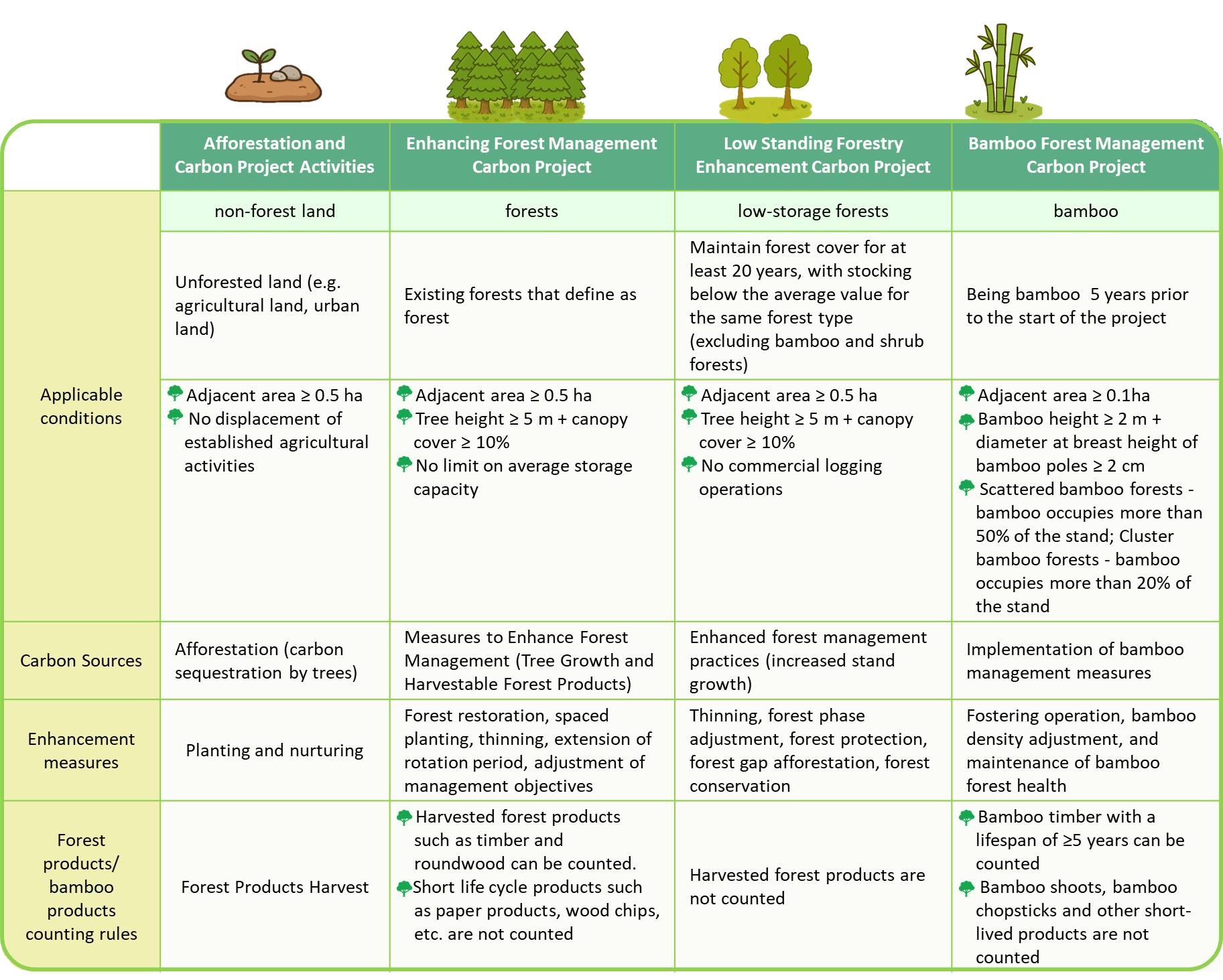
To encourage participation in forest carbon sequestration and achieve net-zero
carbon emissions, the department has collaborated with the Forestry Research
Institute to develop four voluntary reduction methodologies: "Afforestation
and Reforestation Project Activities", "Carbon Sink Project for Improved
Forest Management", "The Project of Increasing Carbon Sink from the Low
Stocking Forest", and "Carbon Sink Project for Bamboo Forest Management"
proposed by a business. Currently, four local forestry category methodologies
have been approved and announced by the MOENV.

 Home
Home


 Taiwan High Speed Rail